Unknown's avatar

About valaida

writer. thinker. listener. idea whisperer. traveler. mad word geek. absolute scrabble freak. drinker of life. da*n good friend. ridiculous foodie. imaginative dreamer. afflicted party planner. kind conqueror. okra lover. hillbilly w/ southern roots far-stretched global sights. author of book that reframes portraits of philanthropy. Giving Back: A Tribute to Generations of African American Philanthropists | http://bit.ly/htLxQU

Queen of The Trumpet Remembered Still

A friend’s mom had her send me the link below, after hearing an interview on NPR with two young jazz musicians. Here’s her note to my friend:

For the first time I heard Valaida Snow’s name mentioned on All Things Considered today June 3 at about the 4:50 mark. Valaida is named for her as I recall. Send this on to Valaida; she might enjoy it… it’s a brief mention but interesting.

I don’t know if I’ve ever heard a musician single out and mention a Valaida Snow song, so this was a treat. Listen.

“For me, choosing songs that were maybe written in the ’20s, ’30s and ’40s — I choose them because they’re good songs.  — Cecile McLorin Salvant, 23-year-old jazz vocalist


What’s In A Name

Valaida Snow 4

Queen of the Trumpet Valaida Snow, circa 1930

What’s in a name? That which we call a rose
By any other name would smell as sweet.

I suppose Shakespeare was right, but with a name as uncommon as Valaida, I’ve always believed my name has in some way influenced my tastes and style. You see, my mother named me after Valaida Wynn Randolph, her roommate and friend at Bennett College. And Ms. Randolph’s mother named her after the legendary jazz musician Valaida Snow.

If you’re unfamiliar with Valaida Snow, you are not alone. Somehow, after her death in the 1950s, her star failed to continue shining brightly as was the case with her contemporaries and fellow musicians Louis Armstrong, Billie Holiday and Josephine Baker.

Here’s a little more about Valaida from Wikipedia:

She was born in Chattanooga, Tennessee. Raised on the road in a show-business family, she learned to play cello, bass, banjo, violin, mandolin, harp, accordion, clarinet, trumpet, and saxophone at professional levels by the time she was 15. She also sang and danced.

After focusing on the trumpet, she quickly became so famous at the instrument that she was named “Little Louis” after Louis Armstrong, who used to call her the world’s second best jazz trumpet player besides himself. She played concerts throughout the USA, Europe and China. From 1926 to 1929 she toured with Jack Carter’s Serenaders in Shanghai, Singapore, Calcutta and Jakarta.

This slideshow requires JavaScript.

Her most successful period was in the 1930s when she became the toast of London and Paris. Around this time she recorded her hit song “High Hat, Trumpet, and Rhythm”. She performed in the Ethel Waters show Rhapsody In Black, in New York. In the mid-1930s she made films with her husband, Ananias Berry, of the Berry Brothers dancing troupe. After playing New York’s Apollo Theater, she revisited Europe and the Far East for more shows and films.

Valaida lived an amazing, storied life, performing around the globe and thriving through trials and triumphs. Below is one of my favorite stories about her (hence the orchid accents here).

My fave Valaida Snow storyIn fitting fashion, while performing at the Palace Theater in New York City, she collapsed on stage, suffering a fatal cerebral hemorrhage, and was buried on her birthday. Her final curtain call given with flair. Brava!

So today, on the anniversary of her birth (109 years ago) and her burial at age 51, I am remembering the Queen of the Trumpet Valaida Snow (June 2, 1904 – May, 30 1956), a jazz musician extraordinaire and my namesake, once removed.

Here’s a link to a YouTube video about Valaida’s life.

Valaida Snow 5

Nothing Finer

In The Garden_Winghaven

Abundant home-state pride spurred me to instigate a friendly photo-fueled feud via my Twitter feed. The conflict centered on the prettiest and best-est springtimes ever: New Jersey vs. North Carolina. Having spent eight spring seasons in the Garden State, I give props to the beauty that blossoms there once winter ends. But that was precisely the problem. Winters in Jersey were so harsh and long, the thaw melted into and chilled most of the spring months. I prefer springs that arrive on time, or better yet early and then linger. After eight fun-filled years, I quit my Jersey Girl stint and returned home, again a true-blue Carolina Girl.

Pride is among the deadly sins, and my competitive drive is no virtue either. That said, I set out to advance my stance in the online “feud.” Painstaking finesse aided my quest for the most verdurous visions of spring’s breathtaking essence. Then the perfect moment arose and I plucked it. At the height of the fairest season in the Tarheel State, an invitation from my green-thumbed sister, who’s on the Charlotte Garden Club board, to the annual member picnic in the celebrated gardens of Wing Haven.


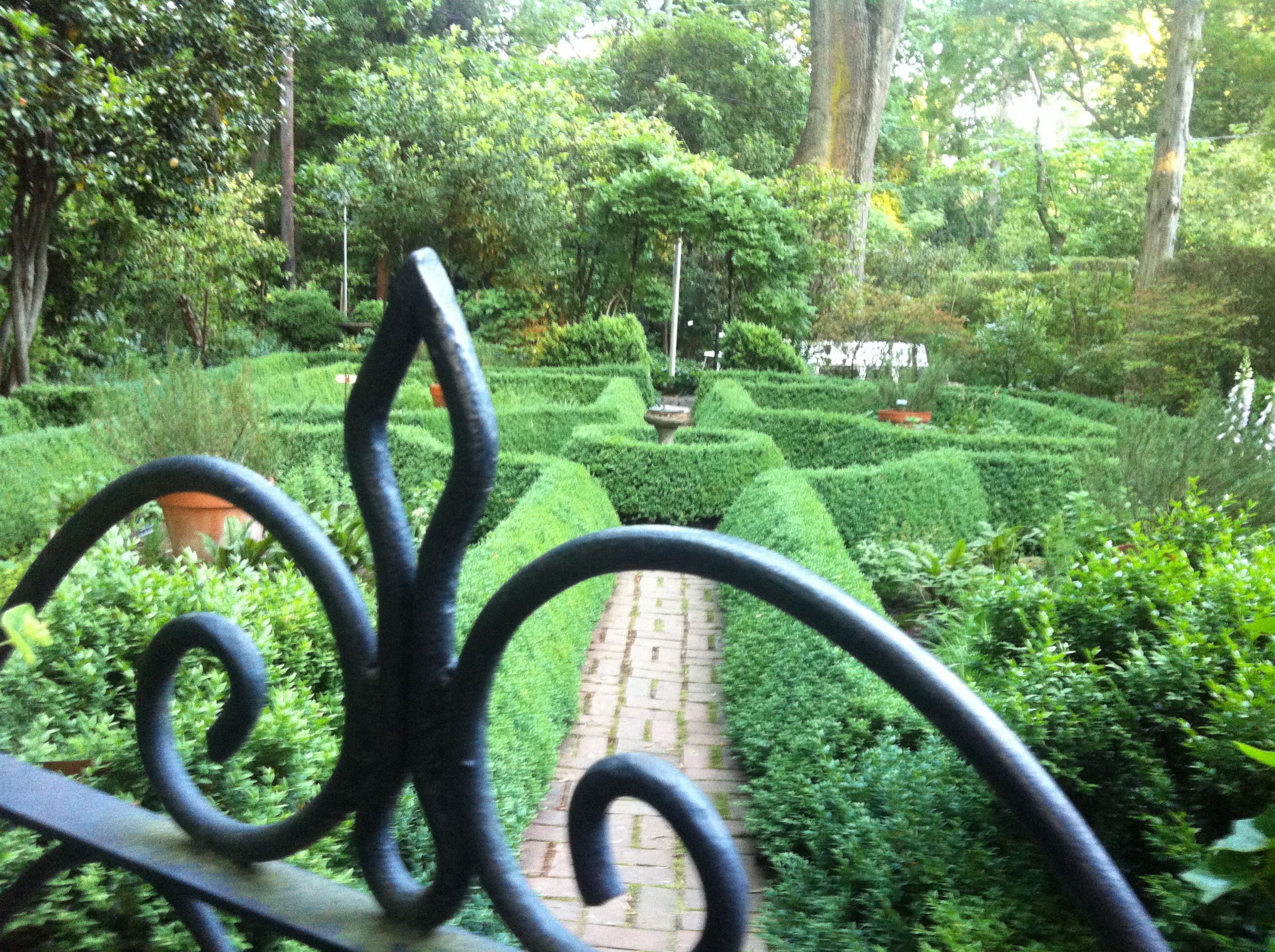
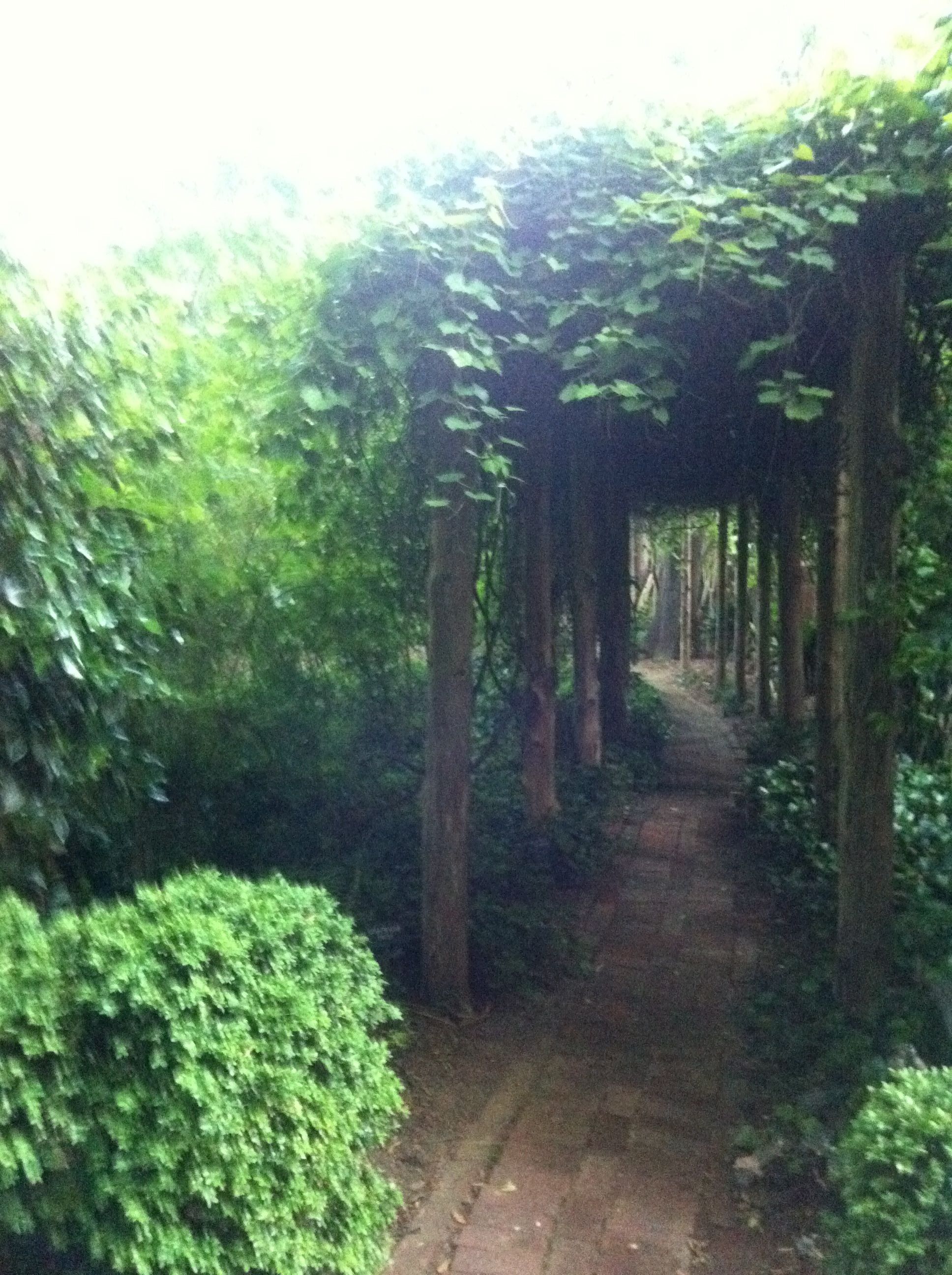
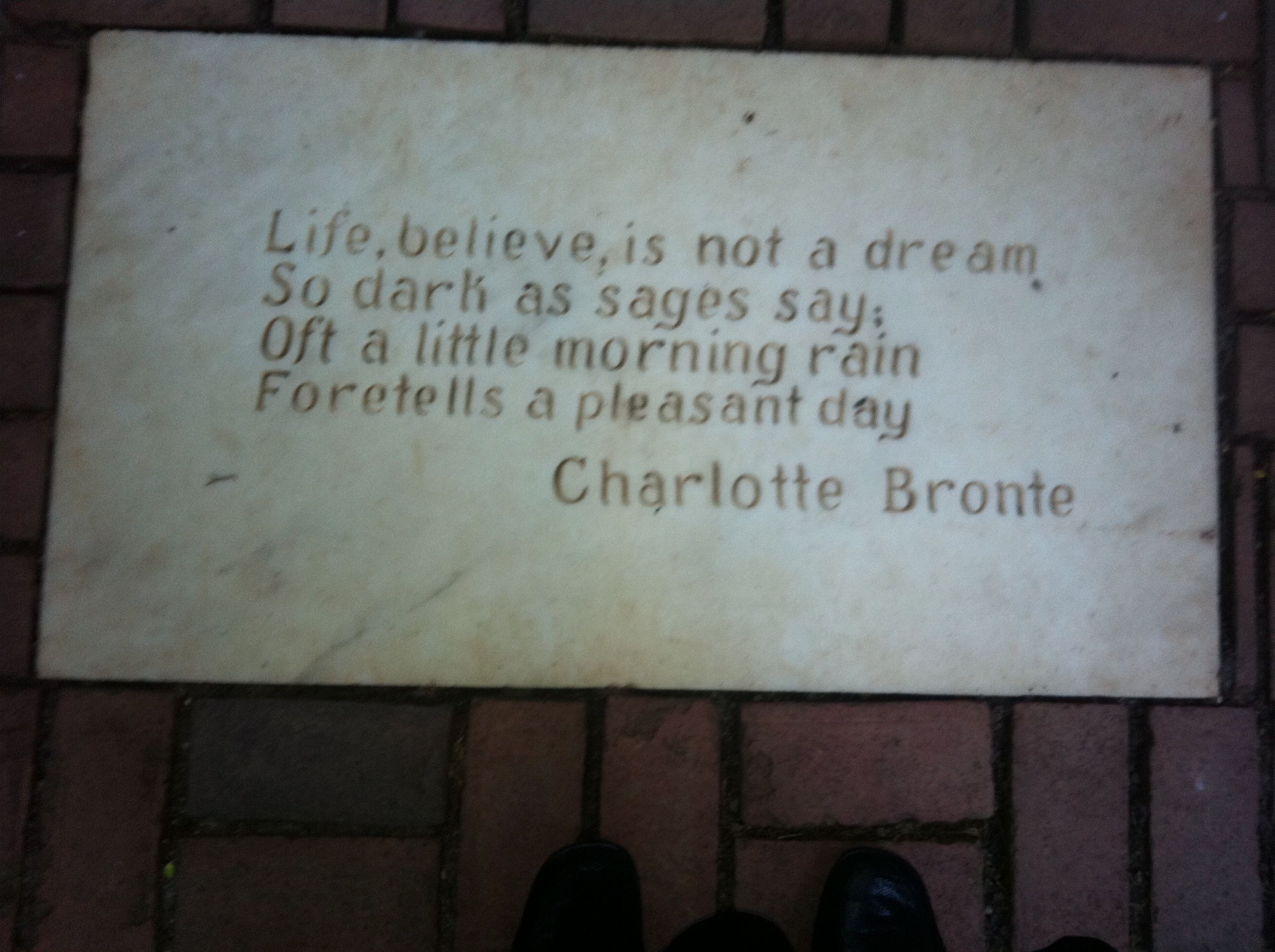
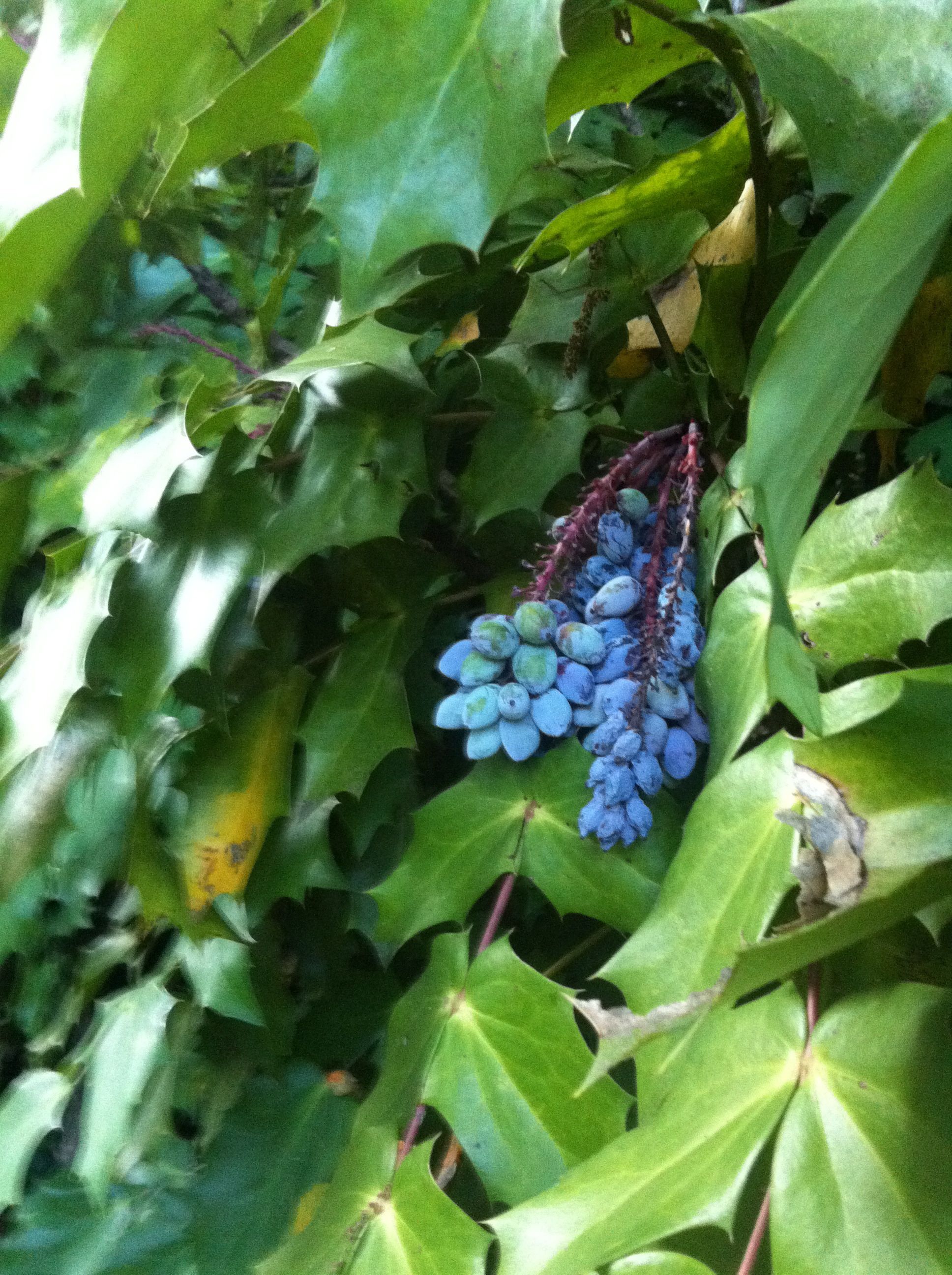
Here’s a fountain of iPhone photos from that magnificent May day, which makes a convincing case about North Carolina’s springtime supremacy. Good thing Jersey Guys Sidney and Brian are such good sports.

— VF


Great White Way_Winghaven

Vines_WinghavenTerra Cotta Pot_WinghavenBronte Quote_WinghaveBlue Berries

If I had Aladdin‘s lamp for only a day,
I’d make a wish and here’s what I’d say:
Nothing could be finer than to be in Carolina in the morning.

From the song “Carolina in the Morning

Revving Up Entrepreneurial Engines in Uptown Charlotte

Chas Thomas_Pride mag

The May-June 2013 issue of Pride Magazine focuses on business and includes a guest column by Charles Thomas, photographer of Giving Back. In addition to being a professional photog, Charles is executive director of Queen City Forward (QCF).

Packard Place, located in uptown Charlotte, houses QCF and other groups that support the creation of fast-growth businesses. I wrote a piece about Packard Place, including an interview with Director Adam Hill as well as with Manoj Kesavan and Charles who are tenants. Packard Place was once a showroom for the iconic luxury car and is now a bustling hot spot for a community of innovators, creators and entrepreneurs.

Residents of the Charlotte area can pick up the latest issue of Pride to learn more about Packard Place, Manoj, Charles and their contributions to create a healthy ecosystem of thriving start-up business and social enterprises in our city. The issue also includes my mini-column about TEDxCharlotte and the roles that businesses and other entities can take on to help spread great ideas.

guest blog post // Vessels From The Heart

To prepare an award nomination, Anne Lambert recently interviewed the artist Charles Farrar. The discussion covered Farrar’s contributions to his artistic tradition and impact in North Carolina. Below is the written piece that Anne compiled. 

WhiteHouseCollectionThere are two Charles Farrars—the first, a retiree enjoying his leisure time after a 25-year corporate career, and the second, a world-class North Carolina artisan and teacher whose finely crafted bowls and vases are spectacular examples of the art of woodturning, prized by museums and private collectors.

Charles Farrar Artist Statement:

My fascination with the many properties of wood began when I was a child growing up in Southern Virginia. I am happiest when creating from found woods that feature irregular grain patterns, knots, burls or voids, such that the finished work provokes a different commentary. I work using a custom built Nichols lathe and tools for the different stages of turning; shaping, hollowing, etc. Ecological sensibility prevents my harvesting living trees solely for the purpose of turning vessels. Some of my vessels are classical forms with finely finished surfaces. Others have hand carved, textured or pigmented surfaces. I’m reminded of my ancestors when I embellish the surface of a piece. While Sub-Saharan Africans were master carvers, it was the Egyptians in North Africa who gave to the world the process of turning wood using a lathe as early as the time of the great pyramids.

Since 1997, Farrar’s artwork has shown in major U.S. cities including Albuquerque, Charlotte, St. Paul, Richmond, Atlanta and New York. Work has been on permanent loan with the State Department at the United States Embassy in Madagascar. His recent exhibit schedule includes The Mary Martin Gallery, Charleston, SC; Old Courthouse Galleries, Concord, NC; Whitespace Gallery, Winston-Salem, NC; The American Association of Woodturners Invitational Exhibit, Albuquerque, NM; The Gregg Museum at NCSU School of Art and Design, Raleigh, NC; and the Harvey B. Gantt Center for African-American Arts + Culture, Charlotte, NC. Among corporate commissions/purchasers are Bank of America, First Citizens Bank & Trust Company, and The David Geffen Playhouse, Los Angeles.

Work is in the permanent collection of the Danville Museum of Fine Art, John & Vivian Hewitt Collection (at the Harvey B. Gantt Center in Charlotte), The Episcopal Diocese of Southern Virginia, Essence Magazine editor, Susan Taylor; actress, Debbie Allen; author and poet laureate, Dr. Maya Angelou; Former US Solicitor General, Walter Dellinger; Artist/Art Historian, David C. Driskell; The White House Collection, and The Archbishop of Canterbury.

Farrar’s studio is in Concord, NC. This is where he lives and creates his beautiful works of art. Farrar moved to the Charlotte area in 1974 when he began his career working for Southern Bell (now AT&T). He describes how he became interested in woodturning:

In about the twentieth year of my corporate career in Charlotte, North Carolina, I purchased a turned wood vessel from artist David Goines during the SpringFest street arts festival. I liked the Camphor wood vessel so much that the next year—maybe 1991—I went back to the festival hoping to find the same artist. I did and said to him, “I’m going to buy another vessel, but I wish I knew how you did this.” He understood my fascination with his vessels, and he said, “Come up the mountain next Saturday and I’ll show you everything I know about woodturning.” He was my first mentor. For half a year I would take the best examples of my work from the previous two-month period for him to critique. He was very direct in his criticisms; he drove home the point that wood art is collected for its line and form more than wood color. Goines always left me inspired and wanting to improve my skills. Turning wood was just a hobby for me at that point. A few years later I took an early retirement from my corporate job and had the time to immerse myself fully in my hobby. Within two years of my retirement, a very fine gallery in downtown Charlotte saw my work and offered me a solo exhibition. It is then that I began to think of myself as an artist.

The ‘very fine gallery’ in downtown Charlotte was owned by B.E. Noel, who first encouraged Farrar to sell his works. When B.E. told him she wanted to represent him, Farrar laughs, “I asked her ‘What does that mean?’” Within a year, Noel Gallery had sponsored a major exhibition of his work and he began displaying at art shows and festivals. B.E. Noel moved her gallery to New York in the mid 2000s, but continues her exclusive representation of Farrar to this day, although his work is also shown in galleries across the US, including Los Angeles, Seattle, Atlanta and Charlotte Fine Art Gallery.

Farrar describes the ancient threads and meticulous techniques that provide inspiration for his work:

I am drawn to hollow turned vessels, usually with walls about 3/16″ thick, where the inside wood chips have to be evacuated through the small opening at the top center. The challenge of hollowing large vessels through small openings is addictive. I am very much moved by shapes of ancient ceremonial and utilitarian vessels from the Motherland, if you will, and I am especially partial to the perennial egg shape, which works, no matter whether the pointed end is fashioned as top or bottom.

Not everyone knows that historians now agree that the woodturning device, the lathe, was given to the world by the Egyptians some 4,500 years ago, about the time of the Fourth Dynasty or the period of the great pyramids. When I teach the woodturning process at craft schools—i.e., Arrowmont or John C. Campbell—I also show hand-carved bowls that demonstrate how sub-Saharan Africans created beautifully formed and adorned vessels, using solely their skills as master carvers. In my collection is a large hand carved Senegalese bowl from a Fromager tree, perfectly round, except for delicate hand tool marks.

As a woodturner, I hope to create vessels that speak to people who have a love of this very ubiquitous and tactile medium. I hope that my audience will appreciate and enjoy my sometimes use of color and other enhancements on turned and/or carved vessels. I believe that wood happens to be my canvas, and that I have license and freedom to be as creative as the imagination allows. If line and form (design), surface texturing or carving is appropriately executed, then the work will appeal to the greatest number of admirers.

When asked about how he turns a piece of wood into a work of art, Farrar speaks with passion about his process:

It simply boggles the mind sometimes! Whenever I see a blank of wood and I put it in my lathe, soon, within a few hours or a day, the shape of the art begins to reveal itself. [After all these years] I am pretty much able to see the shape inside the wood before I start the process. Sometimes I will spend half a day just seeing the wood, rolling it around in my hand, seeing the grain pattern, or the knots or the void, seeing how I might be able to feature that knot or that void. I [often] go in the opposite direction of a museum quality piece of wood. I prefer those blanks with a flaw, because the flaw is where the character is and where the story is. The story can be as valuable as the piece itself.

Just as David Goines mentored him, Farrar feels compelled to teach others. He has taught at the John C. Campbell Folk School in Brasstown, NC and at Arrowmont School of Arts & Crafts in Gatlinburg, TN. “When the schools invite you,” Farrar says modestly, “it’s something of a comfort that your work is being recognized, and that they welcome your ability to share your art and your craft.”

Farrar is especially motivated to inspire young African-American artists. “There are so few blacks [who are practicing traditional crafts], yet we were the folks who first made our lives easier by creating and fashioning things that we could use that were also beautiful. But we didn’t carry it forward as we should have.” Farrar recalls attending a national conference for traditional craft making. “Out of 1,500 attendees, fewer than 10 looked like me [were African American], and that was an increase from five a few years before.”  Farrar also recognizes that few public high schools still offer shop and industrial arts programs, where students might have previously learned these specialized skills. As a result, Farrar feels obligated to “go back and give back…to excite these young folks” by exposing them to traditional crafts and wood turning. The first project he often gives high school students is to make a pen. “We make a pen, a usable, workable pen – and these students get so excited, their faces light up and they get a gleam in their eyes, they can’t believe that they have made something so beautiful and useful. They don’t want to stop creating art. I owe it to them to help them.”

Farrar was honored in 2010 when Charlotte Mayor Anthony Foxx presented President Barack Obama and Mrs. Michelle Obama with a gift of one of his works, a turned hemlock vessel with a lid adorned by a filial. The work (featured in the photo above) is now part of the White House collection. Farrar’s work was also featured at an exhibition at the Harvey B. Gantt Center—Romancing the Eye: Louis Delsarte, Charles Farrar and Larry Lebby—from June 25 through September 3, 2010. A video of some of Farrar’s works from that exhibit can be found here. More information about Charles Farrar and his portfolio can be found here.

******************************

Anne Lamberttoday’s guest blogger, is an accomplished non-profit professional with more than 20 years of experience in fundraising, project planning and arts management. She has worked as a fundraiser, grant writer and development consultant for a variety of organizations, including Harvey B. Gantt Center, Carolina Raptor Center, North Carolina Dance Theatre, UNC Charlotte, Charlotte Mecklenburg Schools, Charlotte Country Day School and Foundation For The Carolinas. Anne also is an actor, director and producer and two-time Metrolina Theatre Award acting award winner. She has produced plays, theatrical events and fringe theater festivals in Charlotte, Atlanta and Philadelphia.
‘Write On’

Write on.

That was part of the message Amiri Baraka, a famously prolific writer, inscribed to me in a book of his poetry, after I gave him a copy of Giving Back during his visit to Charlotte last fall. I love having a steady flow of writing assignments and feeling compelled to reach for my laptop to capture an idea or an observation.

Lately, I’ve been writing up a storm. In addition to the recent guest blogpost for the Lake Institute, below are links to a few of my pieces from the past six weeks as a contributing blogger for BlackGivesBack.com.

Lots of fun events and fascinating people (as depicted below) helped make writing these blogposts a delight. — VF

Lou Bellany, Annetta Foard and Quentin Talley, at "Lou, Q and You at e2" in April  |  Gena J Photography

Lou Bellany, Annetta Foard and Quentin Talley, at “Lou, Q and You at e2” in April | Gena J Photography

From ‘Insights on Faith and Giving’

After a quick search of this blog, I’ve just realized that I failed to mention, here, an honor received months ago yet due to take effect in 2014. About six or seven months ago, the Lake Institute on Faith and Giving at Indiana University Lilly Family School of Philanthropy named me its 2014 Distinguished Visitor.

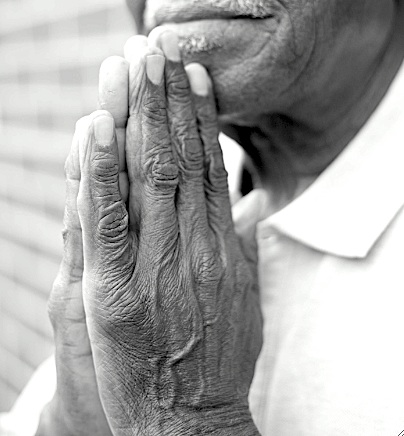
Pruitt prayer hands

Photograph by Charles W. Thomas Jr. featured in ‘Giving Back’

Selection as a Lake Distinguished Visitor is an honor of the highest order and I am thrilled. Leaders and associates of a prestigious program of the Lilly Family School of Philanthropy recognized the work poured into the Giving Back Project, its uses to spark constructive community conversations and the threads of faith and religion that bind the book. As the Distinguished Visitor for 2014, I will have an opportunity to travel to Indianapolis and the Indiana University-Purdue University campus in fall 2014 to lead seminars, give lectures, share Giving Back and engage faculty and students from the various university disciplines in conversation on issues related to religion and philanthropy.

I hadn’t blogged about this honor earlier, perhaps, because 2014 seemed so far off. (Lately though, next year seems to be barreling toward me faster than ever.) Even with fall 2014 more than a year away, Lake Institute staff has begun building our relationship. Case in point, they recently invited me to be a guest blogger.

Below is more about the Lake Institute. And further below is a link to my guest post.

Lake Institute was created from the legacy gift of Tom and Marjorie Lake, their daughter Karen Lake Buttrey and the Lilly Endowment. Lake Institute exists to honor the philanthropic values of the Lake family and blesses the community with a space for public inquiry and hands on training in the service and study of faith and generosity.

Lake Institute exists to explore the relationship between faith and giving in various religious traditions. We honor the philanthropic values of the Lake family through strategic priorities that continually examine how faith inspires and informs giving. Through years of intentional community building, we have nurtured an environment for public inquiry and crafted hands on training that assists faith communities and donors in the pursuit of their philanthropic passions. 

My Aunt Dora |  Photography by Charles W. Thomas Jr.

My Aunt Dora, the face that launched 1000 days and more! | Photography by Charles W. Thomas Jr. featured in ‘Giving Back’

Insights is the e-newsletter distributed by Lake Institute. The April 2013, Issue #2 features a short piece about my great-aunt Dora who, as a retired pastor and generous woman of faith, inspired Giving Back as well as my recent TEDx Talk. The post is titled “The Face That Launched a Thousand Days.” You can read it here.

Oh and…you can follow @LakeInstitute on Twitter and Facebook, too.

A special note of thanks to Aimee Laramore, Associate Director of the Lake Institute, for her generosity of spirit.

— VF

License…Poetic, Philanthropic and Otherwise

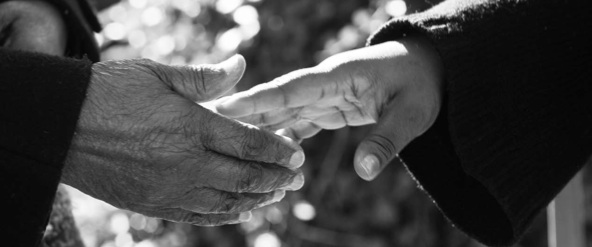
hands2dora_val

Gave away my soul.
Giving back to get it back.
Given what I know.

Ava Wood

Today is the last day of National Poetry Month and year-round I love sharing bits of poetry that were inked for Giving Back, hence the haiku above. After considerable consternation, I granted myself license while writing Giving Back to begin exploring and eventually exhibiting my poetic sensibilities. The experience has been liberating and, at times, disorienting. Stepping out of your comfort zone and eschewing safety nets can be just as scary as it sounds. Nevertheless, I have chosen the high-wire act of expressing myself more freely as a writer, as a poet, as a public speaker and in various facets of my life. Some might call these acts, self-determination.

I have learned that setting inflexible frames about how things are “supposed to be” based on others’ rules and measures is limiting. As is clutching too tight to the unessential. These and a string of other epiphanies are revealed in my recent TEDx Talk, A Picture Reframed.license 

One week ago, a story on Ebony.com—the online version of EBONY Magazine—re-stirred my thinking about the concept of self-determination and the word license.

‘Young Black Philanthropist’ Is Not an Oxymoron is a piece written by Ebonie Johnson Cooper, a thought leader on African American millennial giving and civic engagement. In her Ebony.com story, Ebonie recounts an unexpected conversation that left her troubled, momentarily. It was one in which a woman questioned broad application of the word philanthropist and chastised use of the term for givers deemed of average or modest means. Philanthropy as exclusive domain for the wealthy is, alas, a still widely held belief.

Etymologically, philanthropy is about love. Ironically, most folks believe it’s only about money. The word is derived from philos, Greek for “loving” in the sense of benefiting, caring for, nourishing. So rather than bastardizing a word, as suggested by Ebonie’s inquisitor, we are in fact reclaiming the word and returning it to its root meaning—love. Philanthropy literally means “love of humanity,” as in caring about what it is to be human.

As Ebonie found out, work in the field of philanthropy often brings one in proximity to a preponderance of people who exhibit a pronounced preoccupation with all things pecuniary and of position, power and privilege. Peculiar perhaps, but in the realm of endowments and grantmaking there are those who behave as if endowed with super-human power and thus proceed passionately as grantors of status, licensors of labels, keepers of community gates and authorizers of civic value.

Convoluted social constructs and hierarchies, in the name of philanthropy, do not warrant investment. For me, philanthropy encompasses simpler kinds of kindness, generic acts of generosity and humility amidst concern for humanity—all the while being no less thoughtful, strategic or transformative. Love is plain, yet potent that way.

Ebonie and I and others are part of a new generation of philanthropists that spans generations, race, class, position, income and wealth. It includes members of Community Investment Network who are giving, collectively, through giving circles. It includes Laura Arrillaga-Andreessen, author of Giving 2.0, a book that makes a case about the future of philanthropy and how “individuals of every age and income level can harness the power of technology, collaboration, innovation, advocacy, and social entrepreneurship to take their giving to the next level and beyond.” It includes Asian Americans/Pacific Islanders in Philanthropy (AAPIP) which is “building democratic philanthropy.” And it can include you.

Ebonie made the case this way in her story:

“The more mirrors we see of ourselves as grassroots organizers, board members, and financial donors, the more we will be able to accept our place as modern-day philanthropists who look into our own communities and define for ourselves who we are and what needs to be done. If we don’t, someone else certainly will.”

True. Case in point, absent from tables in U.S. philanthropy are a representative share of African Americans, because we co-sign and are thus co-opted by a corrupted translation of philanthropist. As a community, African Americans have yet to tap our fullest power by determining ourselves assets within our communities, vital players in ending inequities and, yes, philanthropists. While we are free to claim ourselves philanthropists, ultimately the label is unimportant. It is care-full work, sustained generosity and a love of people that characterize a philanthropist.

Haiku introduces this piece and the poet shares what she’s come to know, the hard way. I am hopeful that we all will soon come to know the power of loving, understanding and respecting what it means to be human. At its essence, philanthropy requires no license, labels or limits.

— VF

Straight To Video

Video

Exactly one month ago, our TEDx video, titled “A Picture Reframe: Philanthropy, Identity and Epiphany,” premiered on YouTube and then BlackGivesBack.com, so as this post’s title indicates . . .

Rose Gardener: Maldonia’s Story

“The fragrance always remains in the hand that gives the rose.” — Chinese proverb

With the John and Maldonia Fullwood Family Reunion coming up this summer and my dad’s birthday this week, sentimentality and family pride have been stirred. The portrait below is of Mary Maldonia McGimpsey Fullwood, my great-grandmother who was born 132 years ago. She died before I was born, yet I have always felt a deep connection to her because of my father’s profound affection and memories of his grandmother, as revealed in the story that follows. Maldonia was a mother of 10 children and I recently posted stories about some of them here, as well as a story about her dad here.

Mary Maldonia McGimpsey Fullwood, circa 1945

Mary Maldonia McGimpsey Fullwood, circa 1945

ROSE GARDENER
by Allen Fullwood
A story from Giving Back: A Tribute to Generations of African American Philanthropists

Cherished times grew plentiful on the front porch of my grandmother’s home. My sister, cousins and I spent a large share of our childhood playing up and down Bouchelle Street and around Mama’s house. Mama Fullwood is what the other grandchildren called her, but to me she was always just Mama.

Mama’s porch was a beloved gathering spot for extended family while I was coming up. During the long stretch of summer in the South, you could find Mama sitting in her favorite chair, uncles and aunts perched on the banister and visitors often overflowing to the lawn. One too many cousins and I usually pressed our luck to sit snugly together in the porch swing that hung by a slim chain. As passersby neared the house, Mama would invite them to come up and sit a spell. Unless something was pressing, refusals were few.

At the corner of the porch sprung a beautiful rosebush that bloomed bountifully around Mother’s Day. It was sort of a tradition for neighbors along Bouchelle to stop by Mama’s house Sunday morning or the day before for a red blossom clipped from her rosebush. This simple gift was emblematic of her generosity, and I can picture her smile as she graciously gave each rose.

Monetary wealth was not found in our family, yet Mama earned a reputation for being a generous woman who loved her family deeply, served her church devoutly and gave to all freely. Her manner of treating people provided lessons everyday about giving of yourself, your time, your energy and a kind word. When called to give material objects including money, she taught us to give ungrudgingly.

Mama cared for her family like she tended her rosebush. She exposed each of us to the light of church and faith, rooted us in tradition, nurtured us with encouragement and was prompt to prune us when we grew unwieldy and wild. Her good deeds were a trellis during our upbringing. She likely smiles among the clouds as she watches the seeds of her generosity blossoming today.