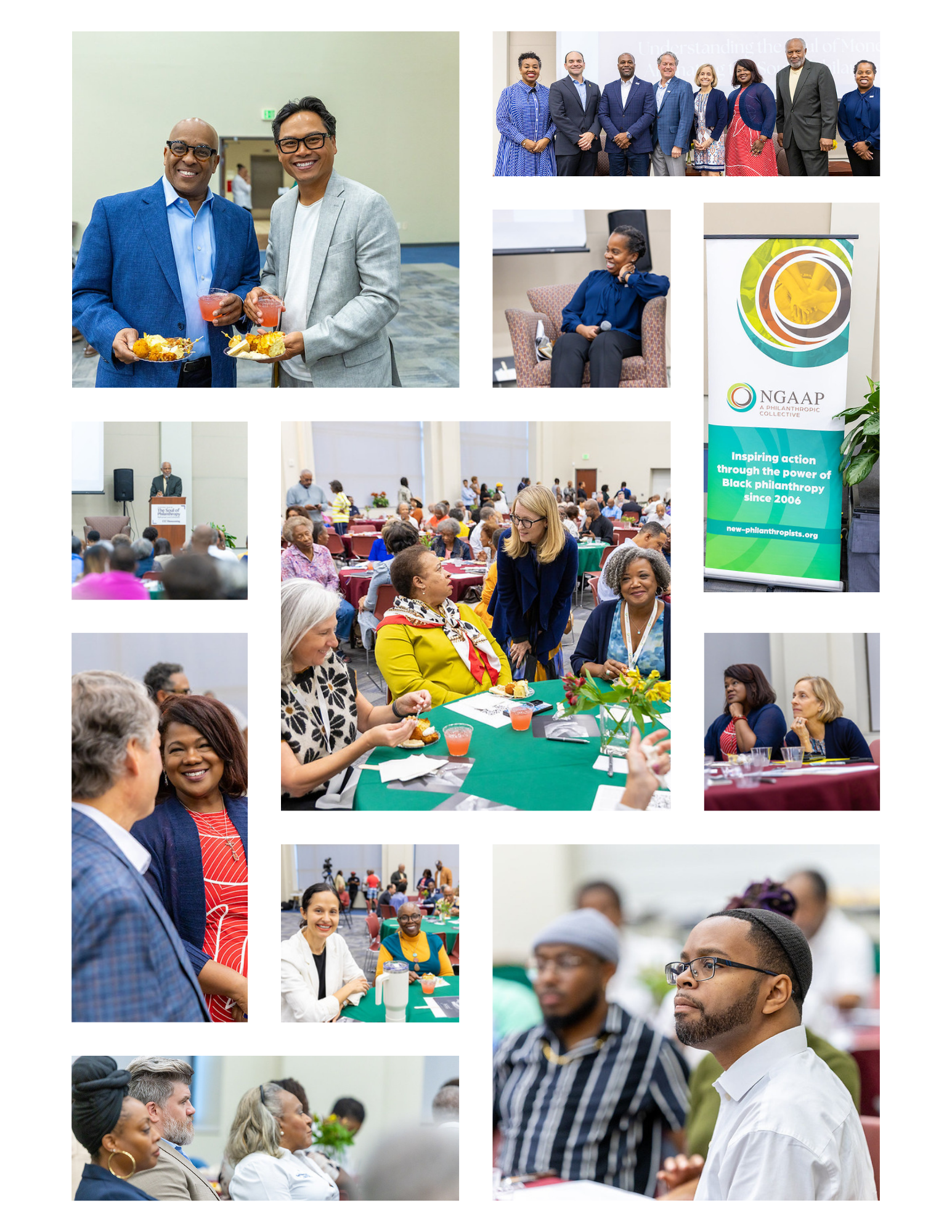
Photo collage from 2025 program on Black philanthropy and Jewish philanthropy • Josouna Photography
“Last summer when NGAAP, the philanthropic collective I’m a part of, announced an interfaith program featuring clergy and philanthropists from both Jewish and Black Christian traditions, the timing seemed fraught.” — excerpt from The Joys and Oys of Us
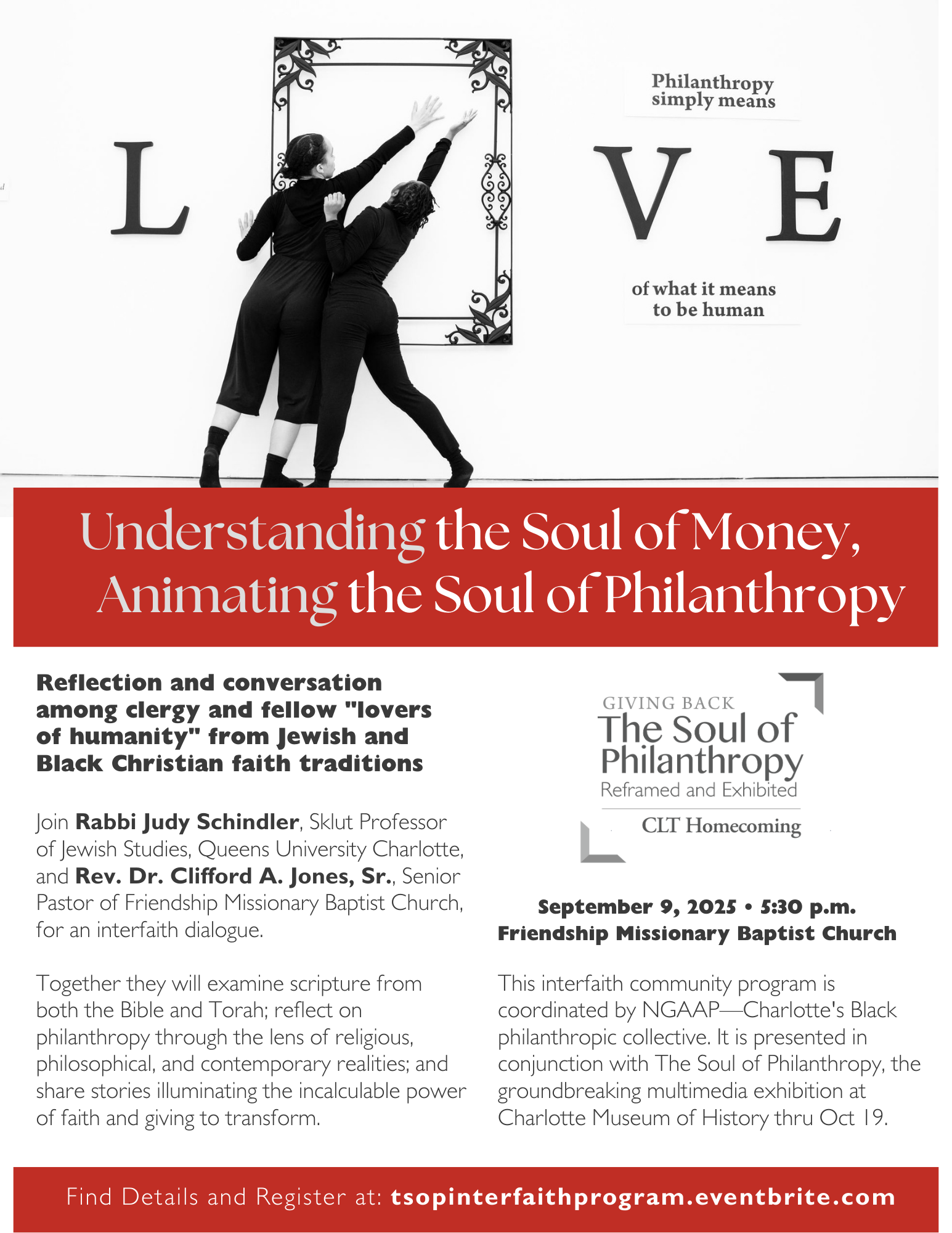
Right on time for Black History Month, Lake Institute on Faith & Giving at IU Lilly Family School of Philanthropy has published a reflection I wrote about a program held last September. The program was part of the community engagement forums organized in conjunction with 10th anniversary “homecoming” exhibition of The Soul of Philanthropy.
A year in the making and titled “Understanding the Soul of Money, Animating the Soul of Philanthropy,” the program was an NGAAP’s collaboration with seven local and national organizations, including Lake Institute.
Read my reflection, The Joys and Oys of Us, along with a reflection by Lake’s Tasha Gibson, in the February 2026 issue of Insights. And watch our highlight reel, featured in the newsletter, too!
It changed my life. That’s what I say about being part of a community of giving circle members. I am not alone in my testimony about the power of collective giving and the potency of philanthropy traditions in Black communities.
Eighteen years ago, I joined 16 other residents of Charlotte, North Carolina to formthe giving circle, New Generation of African American Philanthropists (NGAAP). Together, we give back and lead in myriad ways. In 2011, NGAAP published Giving Back, an award-winning book on Black philanthropy. In 2015, we launched The Soul of Philanthropy, a groundbreaking multimedia exhibit and vehicle for community engagement. From the outset, we’ve pooled dollars to fund local nonprofits. Now a circle of over 70 thinkers, doers, and givers, NGAAP continues to reclaim the root meaning of philanthropy through collective giving and strategic action for social change — a contemporary iteration of what communities of Black Americans have done for centuries.
Following the televised murder of George Floyd on May 25, 2020, for months a deluge of solidarity statements, funding pledges, and calls to right wrongs from corporations and major institutions filled my in-box. NGAAP, with its long-running advocacy of racial equity and social justice, welcomed the amplifying voices of seeming new allies. Looking back, the commotion was questionably sound and fury, signifying nothing.
Just before Christmas, Harrods—the London department store—reached out and commissioned me to write for their magazine. My assignment: Interview and profile CEOs and founders of global luxury and beauty brands that #giveback.
From the brilliant founder of UOMA Beauty who is leveraging her brand to elevate Black entrepreneurs and advocate racial equity to the mastermind behind the “Brilliant Breakfast” supporting young women and girls through the Prince’s Trust, I gained new insights on the power of #philanthropy around the world.
The April/May issue, with my article “The Human Touch” was released last week to over 80K of Harrods’s top clients!
As a contributor, the editors asked this hypothetical question, You can join your favourite TV series character(s) on holiday this spring – who are you with and where are you going?
My answer: “I’d join characters from Succession (I have so many questions!) on holiday in the Seychelles. We’d have a luxurious time and there would never be a dull moment.” Lol
So honored to work alongside members of NGAAP! For 15 years, our philanthropic collective has been inspiring action through the power of Black philanthropy. Read NGAAP Gives Back, Gives Black in Charlotte, our Black Philanthropy Month story via QCityMetro.
Recently, I wrote a piece for the site Appalachian History, sharing family lore. The story centered on my McGimpsey-Fullwood roots in Fonta Flora, a once-upon-a-time fertile farming community in western North Carolina disrupted by man-made Lake James.
“Like a descendant of exiles, I inherited a nostalgic yearning and inextricable ties to a time and place I will never see. Bequeathed and probably cellular too, my hand-me-down memories of Fonta Flora are treasures.”
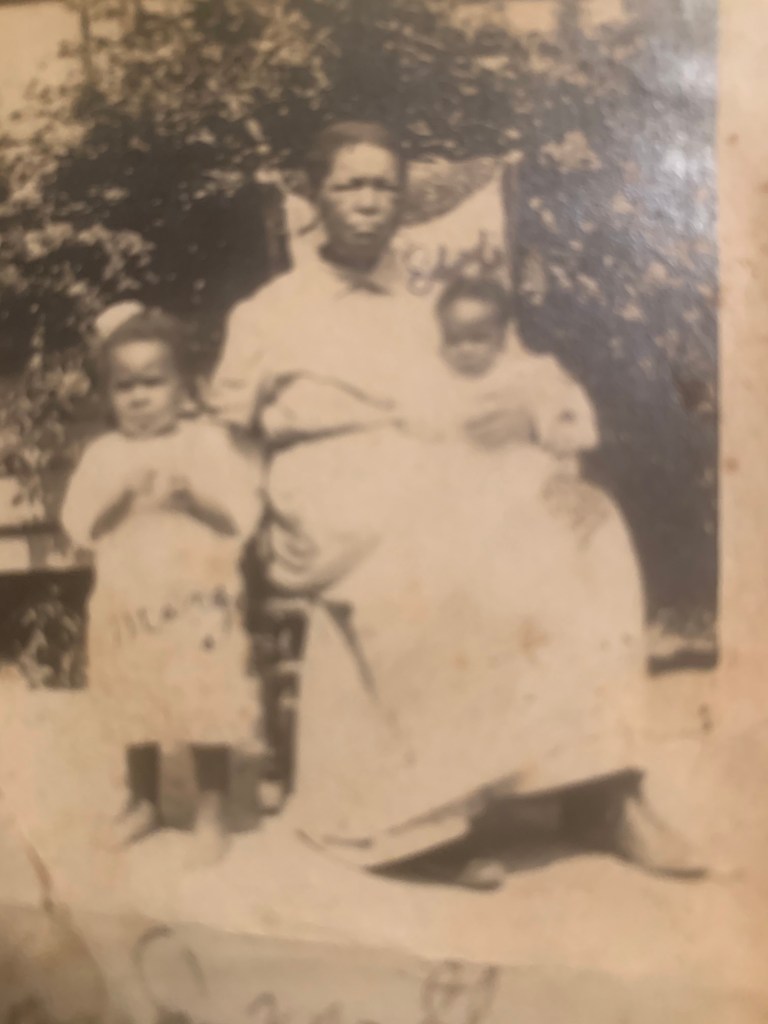
While the site’s editor chose a different title, my working title for the story was Provenance. Defined as “the place of origin or earliest known history of something,” the word provenance epitomizes Fonta Flora to me. Documents going back as far as the early 1800s show Fonta Flora (at one time also known as Linville) was once home to virtually all my paternal forebears. Having stories, photos and visceral bonds that allow me the privilege of knowing my grandmother’s grandmother’s mother and more kin is a privilege I do not take lightly.
The “fonta” in Fonta Flora translates from Latin as “source” or “origin”. Thus, my provenance, my source is the source of the flowers and also the flowering for the McGimpsey-Fullwood family.
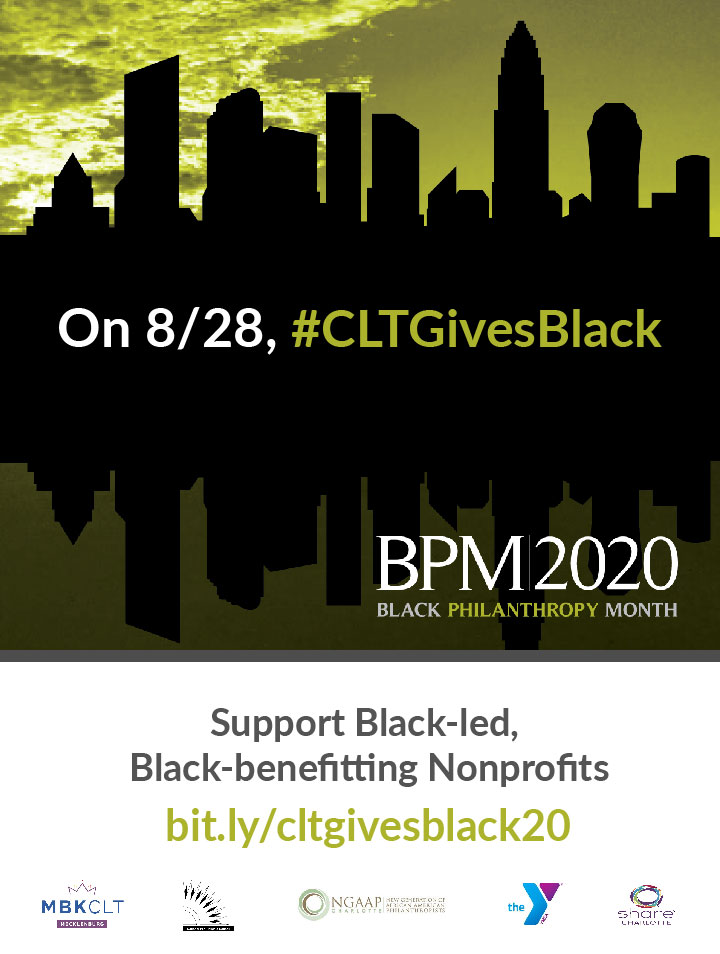
Our key partners for nearly a year have been My Brother’s Keeper of Charlotte-Mecklenburg, National PanHellenic Council-Charlotte Chapter, SHARE Charlotte and YMCA of Greater Charlotte. In addition, roughly 40 Charlotte-based corporations, banks, professional sports teams, foundation and media outlets joined as Promotional Partners.
We are urging people all day to give to one or more Black-led, Black-philanthropy nonprofits, whether with small dollars and major financial gifts. But not to stop there! We want everyone to establish a connection today and find ways to continue the support, through volunteering, sharing your knowledge and network, and donating with re-occurring contributions.
Black-led nonprofits, the backbone of our communities, are often well-recognized beacons of hope and opportunity, delivering critical services, offering training, and giving voice to those frequently unseen and unheard.
Grateful for the recognition and honor of earning the 2020 TRAILBLAZER AWARD from ABFE, the national network of Black executives and professionals in philanthropy.
“This is an amazing slate of awardees! They have provided unwavering philanthropic support for Black communities and exemplify the reasons these awards were created. As the world is fighting COVID-19 and seeing, first-hand, how racial inequities have multiplied the impact of the virus on our communities, we need people and institutions, like these, now more than ever. This is the type of important work that shines, even in the midst of so much uncertainty.”
— Susan Taylor Batten, ABFE President and CEO
In addition to being a part of this year’s cohort of award recipients, I’m thrilled to join past ABFE Trailblazers, including my friend and fellow Black Philanthropy Month co-architect, Tracey Webb.
2013 Trailblazer | John W. Rogers, Jr., Chairman, CEO & Chief Investment Officer, Ariel Investments
2014 Trailblazer | Tracey Webb, Founder, BLACKGIVESBACK.COM and The Black Benefactors
Take a 3D virtual tour of The Soul of Philanthropy, and see what’s going on
Greek philosopher Plato acknowledged how creativity and ingenuity get sparked by a need or problem.
Thirteen years ago, when I wanted to see stories of Black philanthropy elevated and celebrated, the idea for Giving Back was conceived. Four years after the book was published, an exhibit was created to reach more people in new and deeper ways.
Now, this mutha of a pandemic and period of social distancing have given rise to more ingenuity! Take a sneak peek at the latest innovation and newest dimension to the Giving Back Project, our3D virtual gallery for pop-up, abridged exhibitions of The Soul of Philanthropy.
Just as with the standard exhibit, your organization can host and present a 3D Virtual Pop-Up Exhibition to celebrate and inspire giving. WATCH and take a gallery tour, with me as your docent.
Come to see philanthropy differently, with a specially curated, immersive experience that you and your stakeholders can tour, engage with, and learn from.
Happiness in sharing WHEN WE GIVE BLACK. It’s a new documentary-style film short from The Soul of Philanthropy. It is a reminder that philanthropy is deeper than your pockets. Giving Black is about more than race or color, it is a consciousness and a culture. Good things to know and put into practice during this time of great need.
“Imagination is the beginning of creation. You imagine what you desire, you will what you imagine, and at last, you create what you will.”
― George Bernard Shaw
So much fun embracing my idea whisperer ways and sharing thoughts about creating, imagining, dreaming BIG, manifesting and more with Donna Scott and Rachel Sutherland, the producers ofSmart Mouth Life.
“There are years that ask questions and years that answer.”
— Zora Neale Hurston
A decade of growth and good times
Grateful for a decade that included both kinds of years.
Summed up, the last decade was all about giving back. The book, the talks, the exhibitions, the creativity, the collaborations, the friendships, the travel, the lessons, and more.
Wonder what’s in store and what I can make happen in the 2020s? Stay tuned.
This piece was published by QCityMetro.com on Nov 20, 2019 to mark National Native American Heritage Month and Charlotte’s observance of National Philanthropy Day.
Imagine a new age of ideas, leadership and people power
Queen Charlotte statue at Charlotte Douglas airport | Photographer: Michael Dantzler
If we’re going to heal, let it be glorious.– Beyoncé
Just before Independence Day this summer, Edgar Villanueva, author of the bestselling book “Decolonizing Wealth,” engaged in a series of talks in Charlotte. In his book, Edgar, a foundation executive and member of the Lumbee Tribe of North Carolina, poses the question: What if we used wealth to heal, rather than harm?
“Decolonizing Wealth” analyzes dysfunctional racial and colonial dynamics at play in philanthropy. Drawing on personal experiences as a Native American and professional in the philanthropic sector, Edgar offers a prescription for restoring balance and healing divides.
To decolonize, as Edgar describes it, is to reckon with and reconcile wrongs—historical and contemporary—from which a large share of today’s wealth and privilege is derived. It is a process that entails admission and accounting of the exploitation of indigenous and enslaved people during the colonial era and the compounded trauma and impacts on Brown, Black and White people today. Central to decolonizing is a commitment to disclosure, contrition and amends as a means to heal and repair, all of us.
Listening to Edgar made me ponder, what if our community dedicated itself to healing? What if we decolonized Charlotte?
At first blush, the idea might seem improbable for a city built on a proud colonial history. Heck, Charlotte is named for King George’s wife herself. And our city’s symbol is a crown!
Cynics might exploit our standing as the nation’s third largest financial hub as a barrier to change. The mere phrase, decolonizing wealth,would seem antithetical to a bank town.
Then too there is our reputation as a vibrant “New South City,” which would seem to provide sufficient, albeit thin, cover. The implication being we have already grappled with and successfully overcome an unjust past.
Contrary to what these characterizations might suggest, I believe therein lies Charlotte’s big opportunity.Our Southern heritage, our colonial history, and our prominence in the financial sector make an altogether compelling case to decolonize—systematically purge relic ways and mindsets that betray our grasps for racial equity and economic mobility.
Decolonizing Charlotte is not that far-fetched. The city has long boasted vanguard status with the 1775 “Meck Dec.” With that civic DNA, why couldn’t Charlotteans lead again as revolutionaries? This time though, in lieu of ousting Brits, let’s end colonial reign by repudiating economic exploitation, cultural dominance, forced assimilation and other precepts of colonists.
Imagine, the symbolism and the substance of our history and status as driving forces to shake free of colonialism. We are a city that emerged from Native American trading paths and that recently celebrated its 250th anniversary. We, along with the nation, just marked 400 years of documented Black life in America.
We are a Southern metropolis that was once part of the original 13 American colonies and, too, the 14 Confederate states. While our storied past holds many points of pride, it also mires us in contradictions and complicates our lives, relationships and philanthropy.
Like an ancestral brownfield site, our civic landscape holds contaminating elements that have not been washed away and cannot be wished away. Yes, the Queen City is on the rise and a newcomer magnet, yet the “Chetty study” sniffed the toxicity.
Dysfunctional relationships and toxic power dynamics introduced generations ago still haunt our civic life. Even with all the lip service about equity, funding decisions lay bare leaders’ priorities and beliefs. Vestiges of colonial mindsets and the ideology of white supremacy linger.
It is evident in the fact that a third of Brown and Black children here live in poverty, seen in schools that are the most segregated in the state, and obvious in how we live and do things. Troubling patterns are especially stark in our nonprofit and philanthropic sphere.
When “the Charlotte way“ is perceived a term of endearment by some and an indictment by others, you could say, Charlotte’s got a lot to heal.
While many cling to fiction, the truth remains. But wonder if we dropped the façade. Masking how race, wealth and power play out in Charlotte only exacerbates issues. Suppose instead we scrutinized the problematic history of philanthropy and studied today’s data on where the money goes to inform more equitable approaches.
In lieu of assembling another task force, let’s use“money as medicine,” as Edgar puts it. Let’s direct resources to excavate the roots of injustice and examine its messy fruit. In addition to the litany of pre-K, literacy, mentoring and scholarship programs, let’s also invest in disrupting systems and institutions that perpetually feed the disparities that make such programs necessary. We need to be courageous enough and forward thinking enough to undertake that work, both internally and externally.
The great news! We need not wait for citywide buy-in or a large-scale initiative to begin. One foundation, one organization, one family or one person can choose to decolonize and start the journey. One by one, we each can become decolonizers and transform this city.
How you ask? Debunk the myth of meritocracy. Focus unblinkingly on power and race dynamics. Demonstrate an intolerance of injustice. Interrogate presumptive gatekeepers. Set new expectations for leaders. Listen and learn to sit with discomfort. Expose fake equity and keep pushing for the real thing. Read Decolonizing Wealth.
Glory exists in the work, even when it is inconvenient and uncomfortable and overdue. Decolonizing holds the power to forge our center, to heal, and to reveal at long last our civic soul. Charlotte’s elusive identity found. A so-called identity-crisis averted. You’re welcome.
###
Valaida Fullwood is author of Giving Back: A Tribute to Generations of African American Philanthropists, creator of The Soul of Philanthropy exhibit, and a founder of New Generation of African American Philanthropists, a giving circle in Charlotte, NC.
Grateful to my friend, the poet Quentin “Q” Talley, who wrote “Full Circle” nearly 11 years ago. I commissioned the poem, initially, for a special event in 2008. Since then Q has breathed new life into it again and again. A print version was featured in my book Giving Back. He has performed it live at my book talks and various events. He recorded it for kinetic typography that is featured in The Soul of Philanthropy exhibit. And he worked with me to create this video.
I am equally grateful to my friend, the videographer Sino Chum, who filmed this piece. As with Q, Sino and I have collaborated numerous times over the years, like here and here and here. This project includes footage shot in Atlanta, Columbia, SC and Denver. It took more than a year to complete. A year that included Sino returning to his ancestral homeland, Cambodia, and getting married. Mazel tov! 💖
Steve Jobs once said the most powerful person in the world is the storyteller. Though it doesn’t always start out that way, somewhere in the process of writing a story I do feel powerful. It is a satisfying (and rather magical) process that brings me immense joy. With film, poetry and theater, respectively, Sino and Q are great storytellers and work hard at their crafts. That’s why I relish opportunities to collaborate and thus unite and activate our super powers.
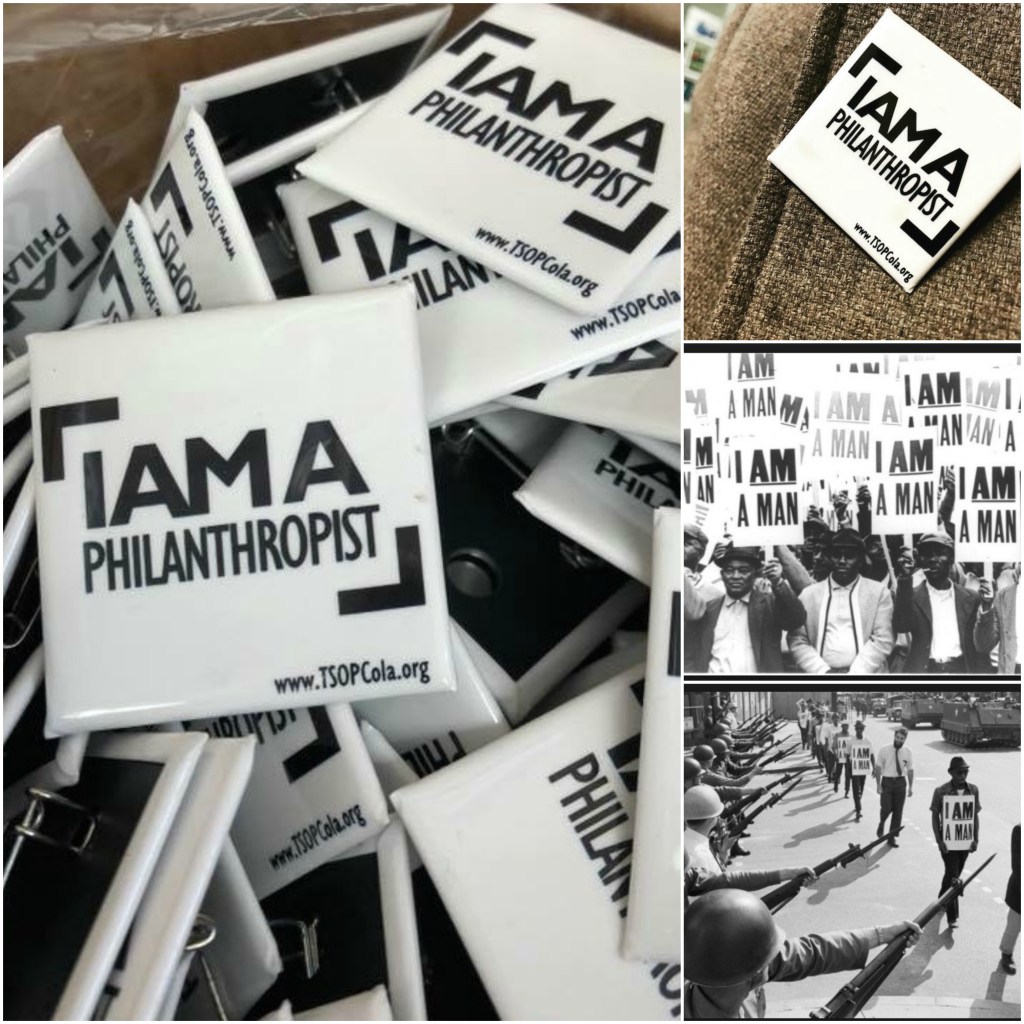
“Black Americans have exercised collective giving to finance social resistance in serial struggles for liberation.” That line is from my recent essay, The Sweetness of Circles. In those struggles, the questions Am I Not a Man? and Ain’t I a Woman? and the assertion I Am a Man have been used and adapted over history to proclaim dignity, declare independence against oppression, and push for equality.
Fifty-one years ago this week, “I AM A MAN” was the slogan of the Memphis Sanitation Strike. The strike brought Dr. Martin Luther King Jr to Memphis (instead of Charlotte, as originally planned) on April 4, 1968 — the fateful day of his assassination. MLK’s death in Memphis intensified the strike and eventually led to its end on April 16.
Today, people on the margins of mainstream institutional philanthropy are borrowing from the past to proclaim: I Am a Philanthropist. It is an assertion of our presence and power in shifting narratives, values, priorities, ways of giving and measures of impact.
In Atlanta, hosts of The Soul of Philanthropy (TSOP) exhibit created buttons in a style harkening back to the picket signs in Memphis. Exhibition hosts in Columbia, SC followed suit, and hosts in Cleveland plan to do the same, as these communities elevate stories that reframe philanthropy. The photo collage above features historic and contemporary images.
I have found that among its other benefits, giving liberates the soul of the giver. — Maya Angelou
April 4th is Maya Angelou’s birthday. Values espoused in her writing inspired me to join with Tracey Webb and Akira Barclay to write The Sweetness of Circles. Like me, Tracey and Akira are chroniclers and members of giving circles. Our collaborative piece was initially posted on Medium and then later picked up by The Charlotte Post and The Nonprofit Quarterly.
I also was motivated to write a parallel and more personal piece, titled The Blacker The Circle, which ran on Qcitymetro.com last week. It is an op-ed about my giving circle, New Generation of African American Philanthropists. Today, the National Committee for Responsive Philanthropy(NCRP) posted the op-ed on its blog.
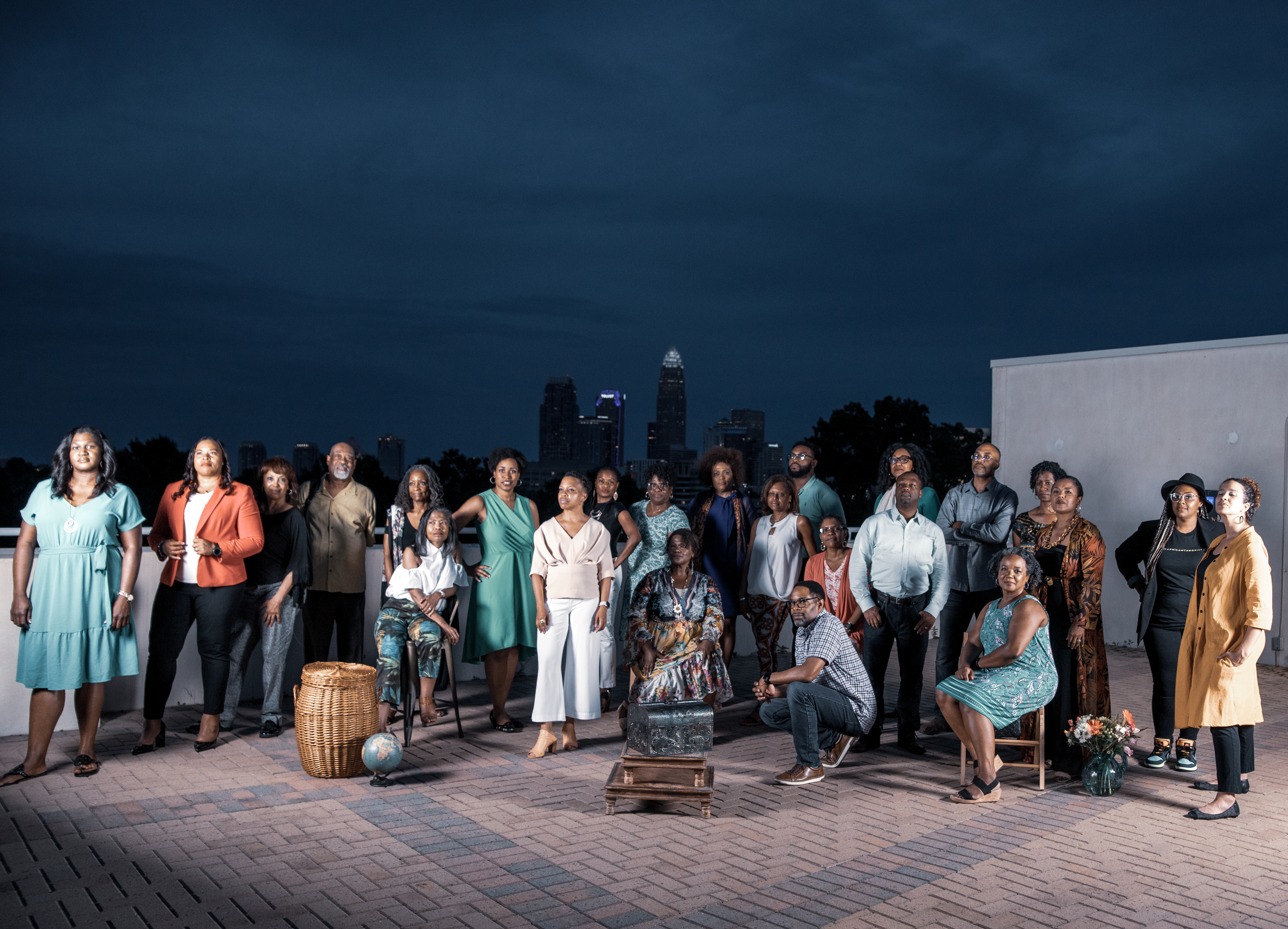
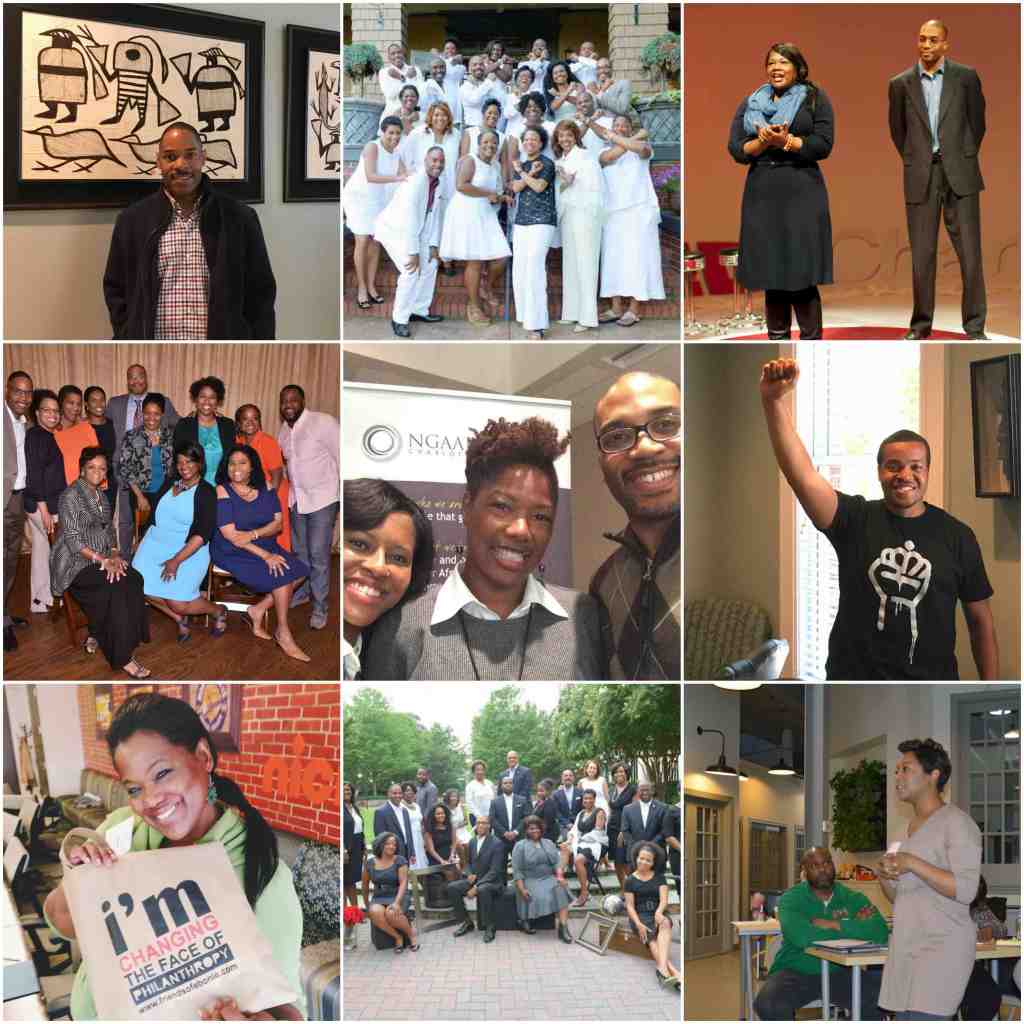
Members of Charlotte’s New Generation of African American Philanthropists over the years.
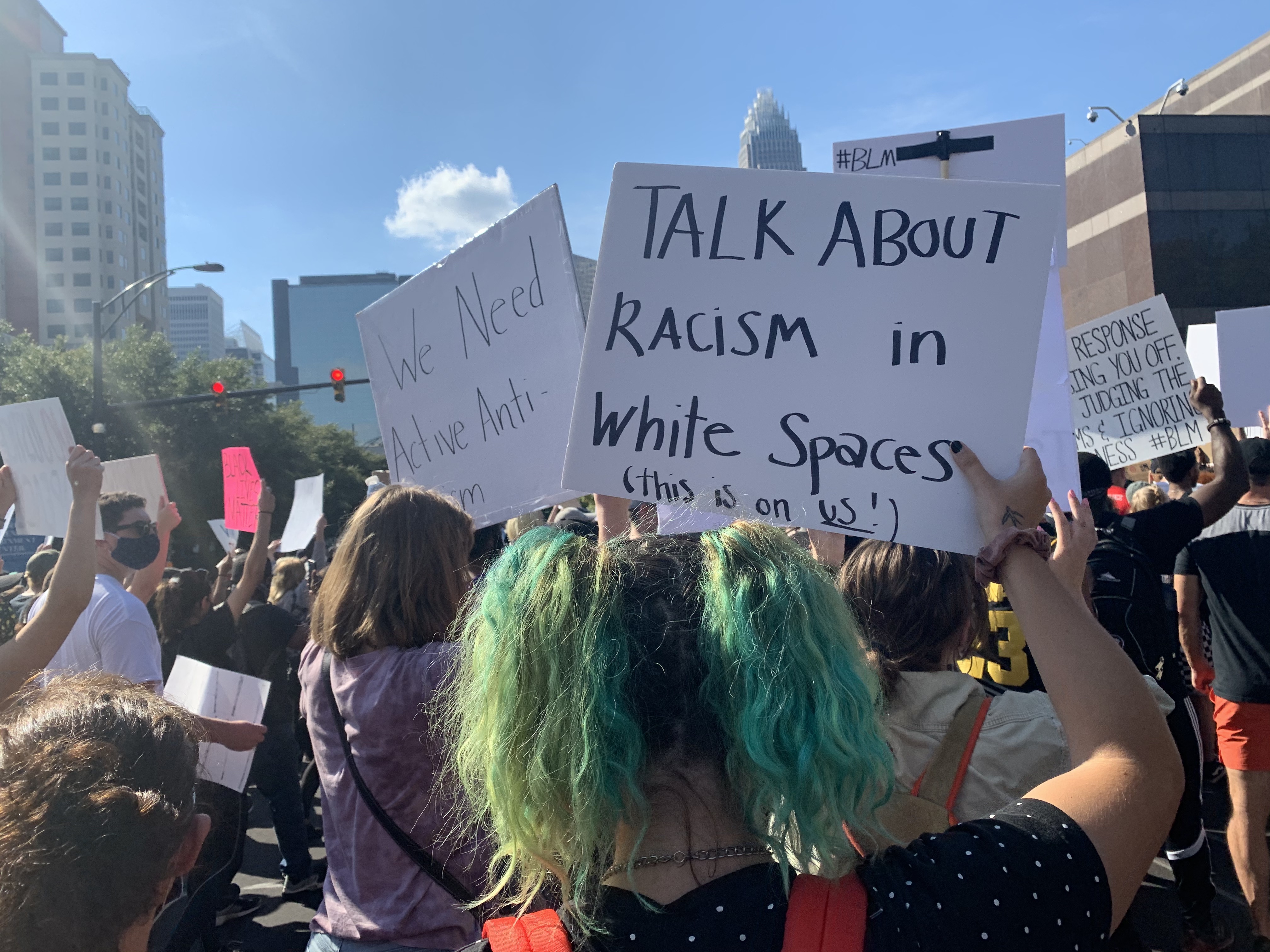
Photo: June 2020 protest against injustice, Charlotte, NC | V. Fullwood
Earlier this month, I spun a whirlwind of emotions and thoughts into an op-ed and posted it on Medium.com. I made an appeal to my Southern city, Charlotte, North Carolina, and hope it’s listening. Below is an excerpt.
By elevating and strengthening Black leadership and voices of groups that historically have been marginalized, our city can make strides in de-centering Whiteness. We must dismantle systems of anti-Black racism that have dominated Southern culture and sustained institutions and structures that perpetuate distrust, oppression, inequity and injustice.










 valaida